


The Silent Killer: Understanding the Dangers of Gastric Dilation Volvulus / GDV (Bloat) in Dogs
Bloat in dogs isn’t just uncomfortable — it’s a life-threatening emergency. Known medically as Gastric Dilation-Volvulus (GDV), this condition can escalate rapidly, sometimes leading to death within hours if left untreated. As a dog owner, knowing the signs and risks of GDV can save your pet’s life
What Is GDV (Bloat)?
Gastric Dilation-Volvulus occurs in two stages:
- Gastric Dilation: The stomach fills with gas, fluid, or food, causing it to swell.
- Volvulus (Torsion): The swollen stomach then twists on its axis, cutting off blood supply to the stomach and spleen and trapping gas and contents.
This twisting prevents the dog from vomiting or belching, which worsens the bloating and creates a cascade of life-threatening problems — including shock, tissue death, and organ failure.
Why Is GDV So Dangerous?
- Cuts off circulation to the stomach and other organs
- Compresses major veins, reducing blood return to the heart
- Impairs breathing as the bloated stomach presses on the diaphragm
- Rapid progression — some dogs can go from normal to critical in under an hour
If not treated immediately, GDV is almost always fatal.
Dogs Most at Risk
While any dog can develop bloat, it’s most common in:
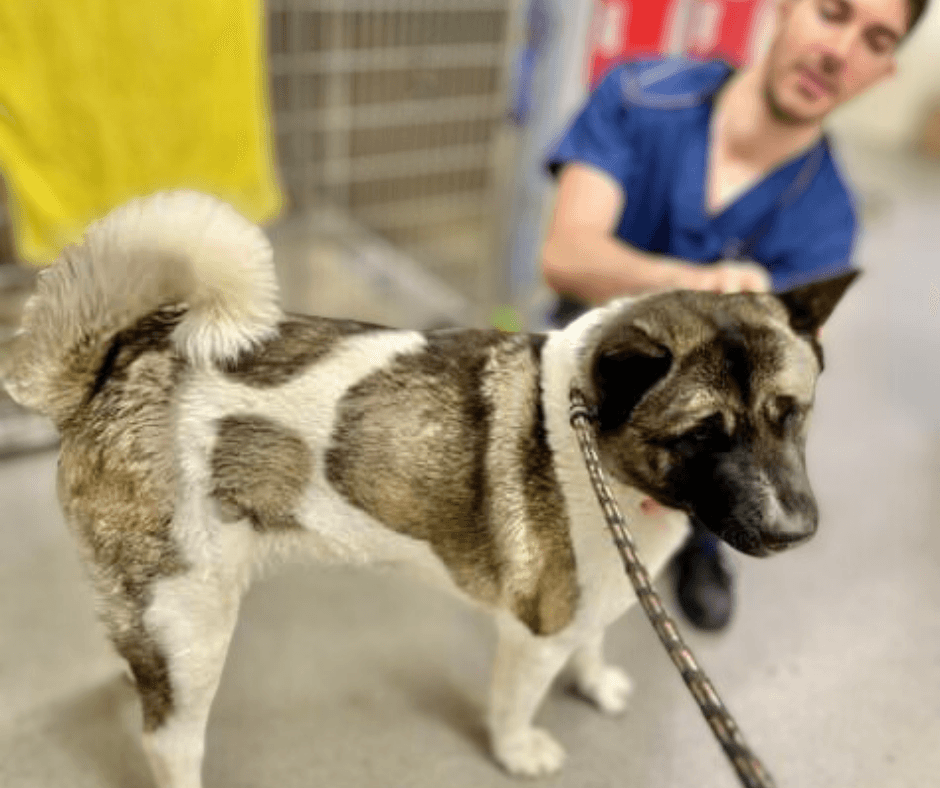
- Large and deep-chested breeds: Great Danes, German Shepherds, Weimaraners, Irish Setters, Labradors and even Akitas
- Older dogs (typically over age 7)
- Overweight dogs
- Dogs with a family history of bloat
- Dogs that eat too fast or exercise right after meals
Symptoms of Bloat in Dogs
Keep a close eye out for these signs:
- Distended abdomen (visibly bloated stomach) though not always immediately visible in the early stages
- Unsuccessful attempts to vomit or vomiting small amounts of foam
- Excessive drooling
- Restlessness, sudden anxiety and pacing
- Pale gums
- Strange downward dog positioning where the dog’s back half is in the air and the front is down.
- Whining or signs of pain
- Rapid breathing or panting
- Collapse or weakness
Time is critical. If you notice these signs, rush your dog to an emergency vet immediately.
How Is GDV Treated?
GDV requires emergency surgery. Vets will:
- Stabilize your dog with IV fluids and oxygen
- Take Xray’s to confirm the diagnosis
- Decompress the stomach
- Surgically untwist the stomach
- Perform a gastropexy (attach the stomach to the abdominal wall) to prevent future twisting
Even with treatment, survival rates vary — which is why early detection is key.
Prevention Tips
While GDV can’t always be prevented, you can reduce the risk:
- Feed smaller, more frequent meals
- Avoid vigorous activity for at least an hour before and after eating
- Use slow-feeder bowls to prevent gulping and extend feeding time.
- Consider a preventive gastropexy (attach the stomach to the abdominal wall) especially for high-risk breeds
