


We love our dogs like family and sometimes, that love can lead us to make harmful decisions without realising it. More treats, more cuddles and a comfy spot on the sofa, But sometimes our good intentions can backfire. Sneaking scraps under the table, a few too many treats… Overfeeding and under exercising aren’t signs of love, they’re a dangerous path to obesity, especially for breeds like the Akita.
⚠️Obesity: The Hidden Threat
Obesity in dogs is more than just a cosmetic issue it’s a serious health threat. Overweight dogs face a significantly higher risk of diabetes, heart disease, arthritis, respiratory issues, and a reduced lifespan. And unfortunately, Akitas are not immune.
Veterinary professionals estimate over half of UK dogs are overweight or obese. It’s one of the most preventable causes of poor health in dogs and yet it’s often overlooked or even mistaken for “healthy appetite” or “puppy fat.” Those extra pounds are quietly putting stress on your dog’s joints, organs, and overall wellbeing.
Why Obesity Is More Dangerous Than You Think
Obesity in dogs increases the risk of:
- Osteoarthritis
- Diabetes
- Heart disease
- Respiratory difficulties
- Reduced lifespan
- Cruciate ligament rupture
For large breeds like the Akita, the stakes are even higher.
⚠️The Cruciate Connection: A Hidden Risk for Akitas
One of the most common orthopaedic injuries in dogs is cranial cruciate ligament (CCL) rupture (similar to the ACL in humans). And excess weight is a major risk factor.
The British Veterinary Association (BVA) and Royal Veterinary College (RVC) both link obesity to increased pressure on the joints, particularly in active or large breeds. This pressure can cause or worsen ligament injuries, especially during sudden movements or exercise.
🩺 According to the RVC, “Overweight dogs are up to three times more likely to suffer from cruciate ligament disease.”
In Akitas, a strong, agile breed with naturally powerful hindquarters, the strain of excess weight on the stifle (knee) joint makes them especially vulnerable.
A cruciate rupture isn’t just painful; it often requires expensive surgery. Long term rehabilitation, and a significant reduction in your dog’s mobility and quality of life.
TPLO (Medical term Tibial Plateau Levelling Osteotomy) surgery prices fluctuate anywhere from £1700 to £4000 dependant on your veterinary practice, and some pet insurers do not cover cruciate injuries, once one leg has gone, the other leg regularly requires surgery at a later stage!
Why Akitas Are Especially at Risk
Akitas were bred for hunting and guarding, with a lean, muscular build designed for power and endurance. When an Akita becomes overweight, it directly undermines the dog’s natural physiology. Here’s why it matters:
- Joint Health: Akitas are prone to hip dysplasia and other joint issues. Extra weight makes these conditions more painful and accelerates joint deterioration.
- Heat Sensitivity: With their thick double coat, Akitas already have a hard time regulating temperature in warm weather. Obesity increases heat intolerance and the risk of heatstroke.
- Reduced Lifespan: Studies show that overweight dogs can live up to 2.5 years less than their leaner counterparts. That’s a lot of lost time for a breed that already has a modest lifespan.
- Behavioural Changes: An overweight Akita may become less active, irritable, become aggressive or even depressed due to the physical discomfort of carrying extra weight and /or the pain endured.
🩺How to Keep Your Akita in Good Condition
Loving your Akita means doing what’s best for their long-term health, not just what feels good in the moment. Here’s how to make sure you’re showing love the right way:
1. Stick to a Feeding Schedule
Avoid free feeding (i.e. putting the dog’s daily allowance down for the day and letting them graze on it freely).
2. Feed to need not emotion
If feeding kibble, choose a good quality one, grain free with a high meat content (fresh meat content should be the first ingredient on the back of the packet – not meat meal, fillers or derivatives), avoid coloured versions that are full of E-numbers and have a high carb content. Consult a dog nutritionist or a specialist veterinary surgeon for advice, on what to feed, and the amount. Do not always go off the back of the packet, as a rule of thumb feed at the level suggested for a dog in the ideal weight range your dog should be in rather than what they weigh currently.
3. Watch the Treats
Treats should make up no more than 10% of your dog’s daily calories. Opt for low-calorie options or healthy snacks like carrot, green beans or apple chunks (no seeds!).
4. Regular Exercise
Akitas need regular exercise to stay physically and mentally fit. Brisk walks, structured play, obedience work, scent work or agility can help keep them in shape.
5. Regular Weigh-Ins
Track your dog’s weight every month to see if your Akita is in an ideal range and adjust the feed amount accordingly.
6. Skip the Table Scraps
Human food is often too rich and fatty for dogs, and it can upset their digestive system. Plus, it encourages begging and unhealthy habits.
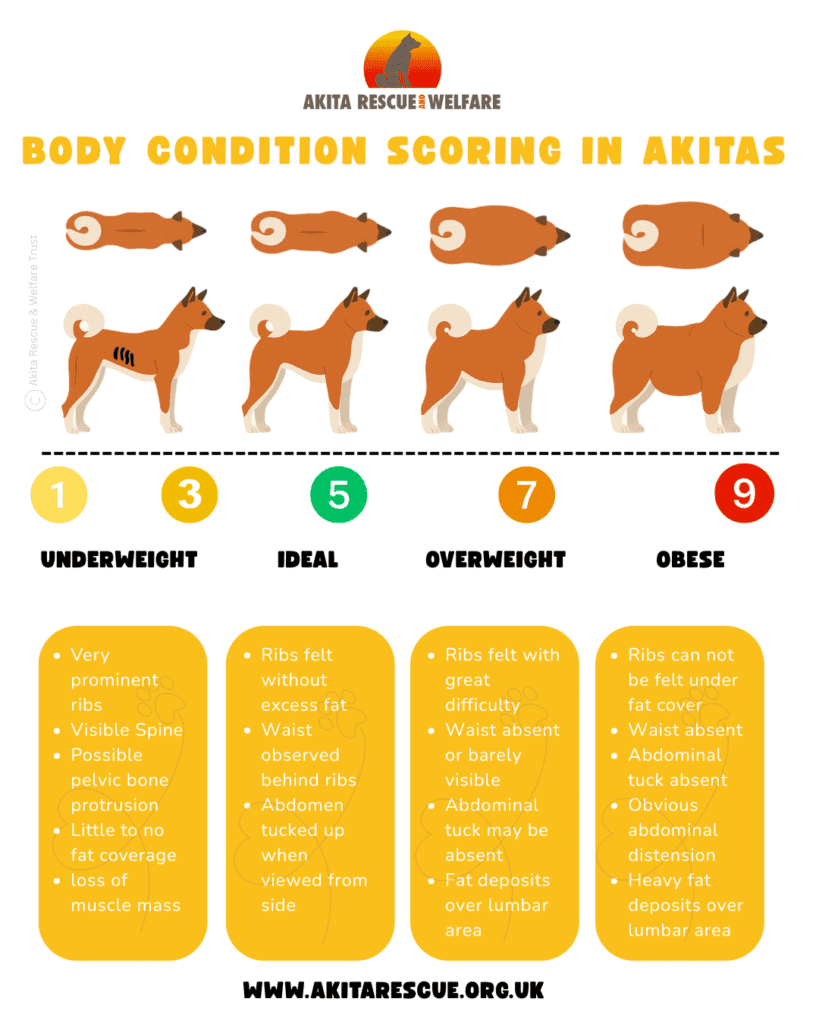
7. Watch for “Fluff Fat”
Their thick coat can hide weight gain (or loss!) Especially in long coated Akitas. Use Body Condition Scoring (see picture) to feel for ribs and waistline or ask your vet for a quick check.
❤️Real Love Means Tough Love
It’s easy to equate food with affection, but overfeeding is one of the most dangerous forms of love you can offer a dog. When we give in to every begging look, we’re not being kind…we’re potentially shaving years off their life.
Your Akita depends on you to make the right choices. By keeping them lean, strong, and active, you’re not just giving them a better quality of life, you’re giving them more life, period.
When you keep your Akita fit and lean, you’re giving them:
- A longer, pain-free life
- Better joint health
- Lower risk of disease
- More energy and joy
Your Akita relies on you to make the right choices. Love isn’t measured in biscuits; it’s measured in healthy years together.
Sources:
RVC Canine Cruciate Disease Study: RVC Study
British Veterinary Association: www.bva.co.uk
