So, you’ve just adopted a rescue Akita… firstly, thank you.
You’ve probably imagined long walks, cuddles on the sofa and your new best friend settling straight in like they’ve always lived there. Sometimes that happens, but very often rescue dogs need time, patience and understanding before they truly feel safe.
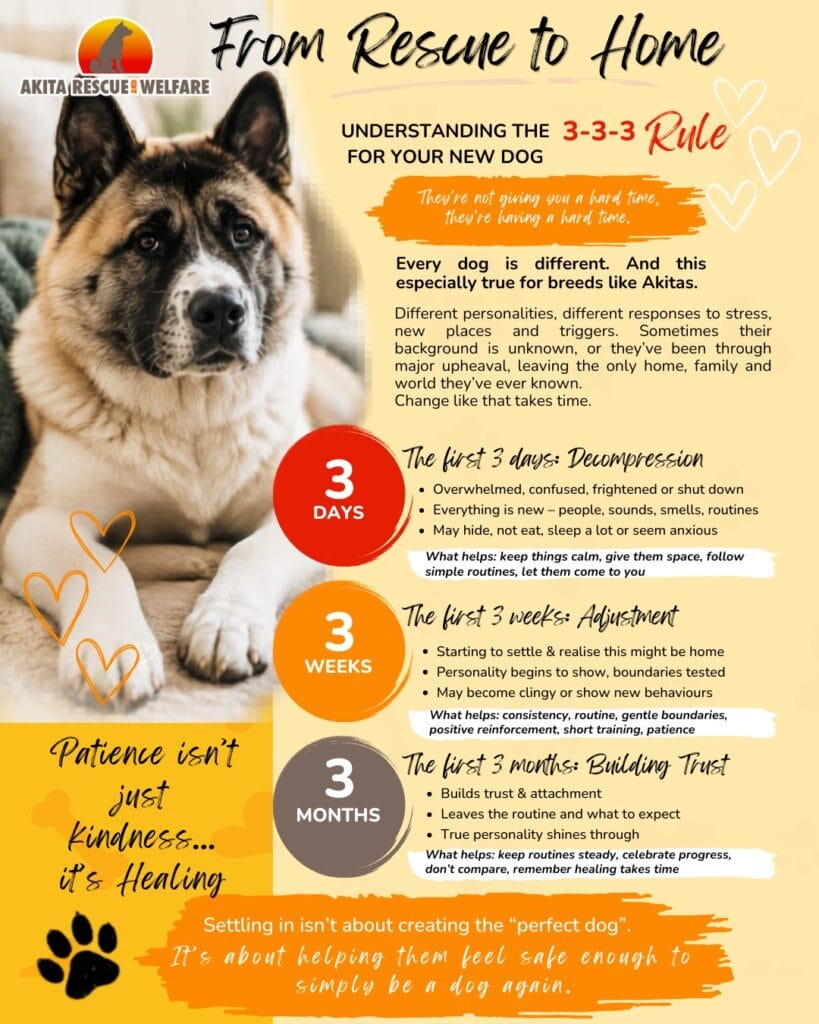
One of the most helpful things to remember is the 3-3-3 rule.
It’s not an exact science and every dog is different, but it’s a really good guide to understanding what your rescue dog may be feeling in those early days and months.
And for those adopting breeds like Akitas especially, it’s important to remember that no two Akitas are ever the same. Even if you’ve owned the breed before, your new dog may react completely differently to stress, change, new environments or certain triggers. They all have their own personalities, tolerances and coping mechanisms.
Sometimes we know very little about their background. Other times they may have come from a loving family home they’ve known since puppyhood, only to suddenly lose everything familiar because of changes in circumstances. Imagine going from familiar people, smells, routines and surroundings into a completely unknown environment overnight. That’s a huge emotional upheaval for any dog.
The first 3 days:
Your dog is likely to feel overwhelmed, confused, frightened or completely shut down. Remember, everything is new. New people, smells, sounds, routines and surroundings.
Some dogs may hide away, sleep constantly, refuse food or seem nervous and withdrawn. Others may appear overly excited or anxious, barking, howling or trying to escape.
This is not their true personality yet.
What helps:
- Keep things calm and quiet.
- If they are showing signs of stress, use calming sprays on a bandana around their neck or collar, add to their bed / blankets. We highly recommend Pet Remedy Spray.
- Give them a safe space to retreat to.
- Don’t overwhelm them with visitors
- Stick to short walks and simple routines
- Let them approach you in their own me, don’t get in their faces and roll around on the floor with them.
- Be patient with toileting accidents or nervous behaviour.
The first 3 weeks:
This is usually when your dog starts to decompress and realise this might actually be home.
You may start to see more personality emerge. Confidence can increase, but so can testing boundaries. Some dogs become clingy, others may suddenly bark, chew or show behaviours that weren’t obvious initially.
This stage can feel challenging because many adopters think things are “getting worse”, when actually the dog is beginning to feel safe enough to express themselves.
What helps:
- Consistency and routine
- Gentle boundaries
- Positive reinforcement
- Short training sessions
- Predictability
- Patience, patience and more patience
The first 3 months:
By now most rescue dogs begin building trust and attachment. They understand the household routine, know where they sleep, who feeds them and what to expect day to day.
This is often when the real bond forms.
You’ll likely start seeing their true personality shine through, the quirks, the affection, the silly habits and the confidence that comes from finally feeling secure.
What helps:
- Continue building trust
- Keep routines steady
- Celebrate progress, no matter how small
- Don’t compare your dog to anyone else’s
- Remember healing takes time.
The biggest thing rescue dogs need is not perfection. It’s safety, patience and love.
Some come from neglect, abandonment or frightening situations. Some have never lived in a home before. Others are grieving the sudden loss of the only life they’ve ever known.
Settling in is not about creating the “perfect dog”. It’s about helping them feel safe enough to simply be a dog again.
And honestly? Watching a rescue dog finally relax and realise they are home is one of the most rewarding things in the world.
So once again, thank you for choosing to adopt and not shop.