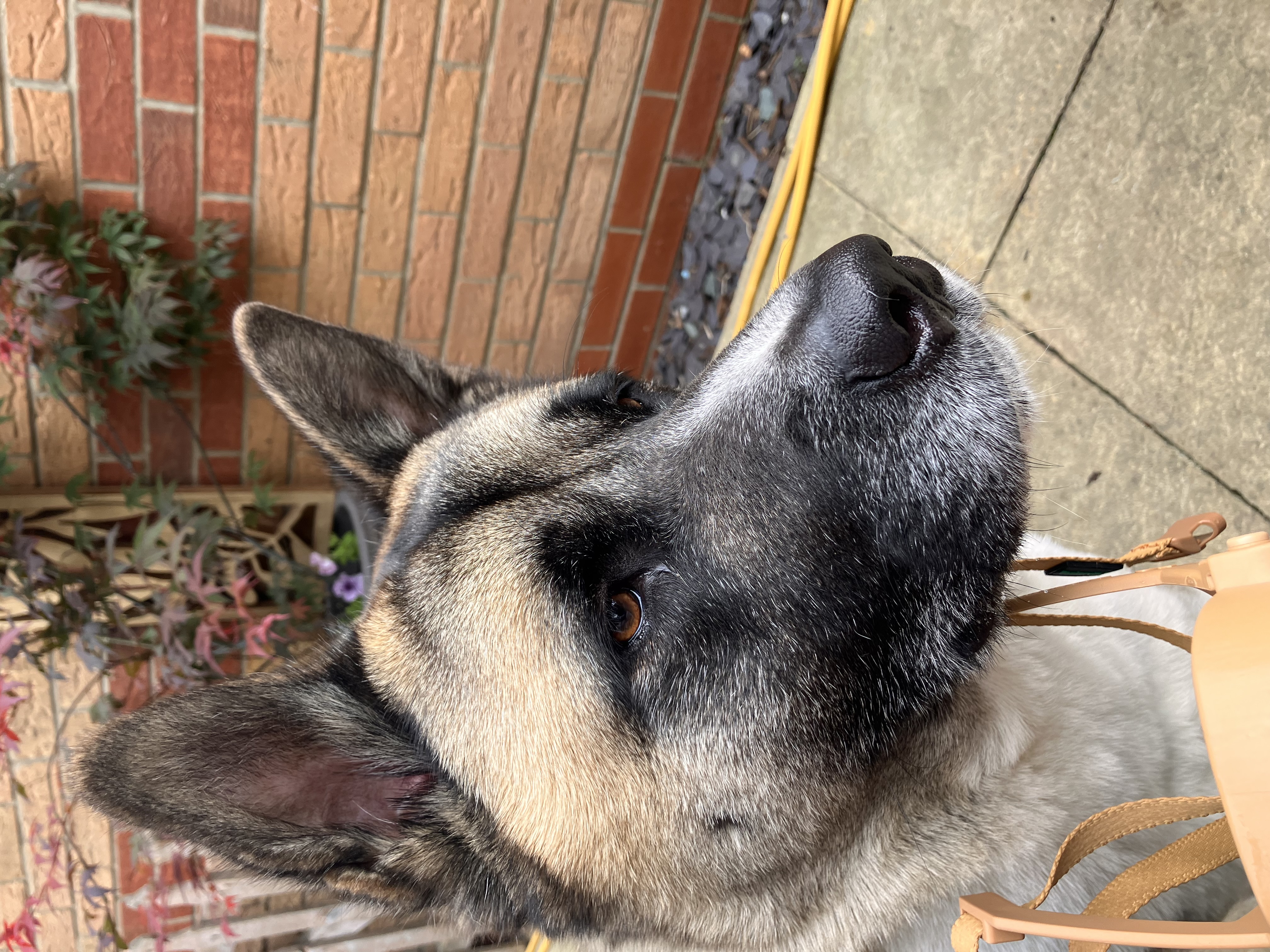
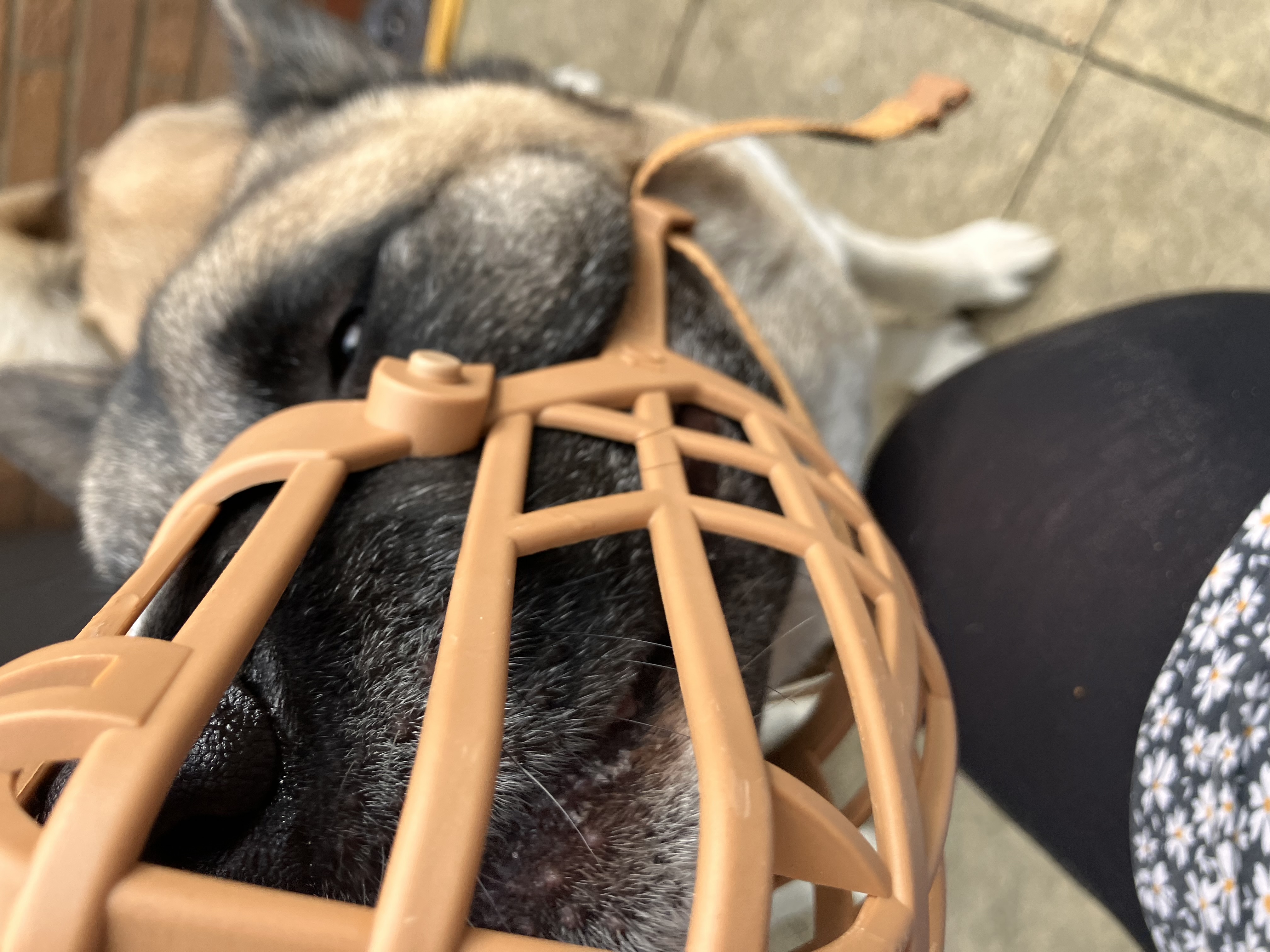
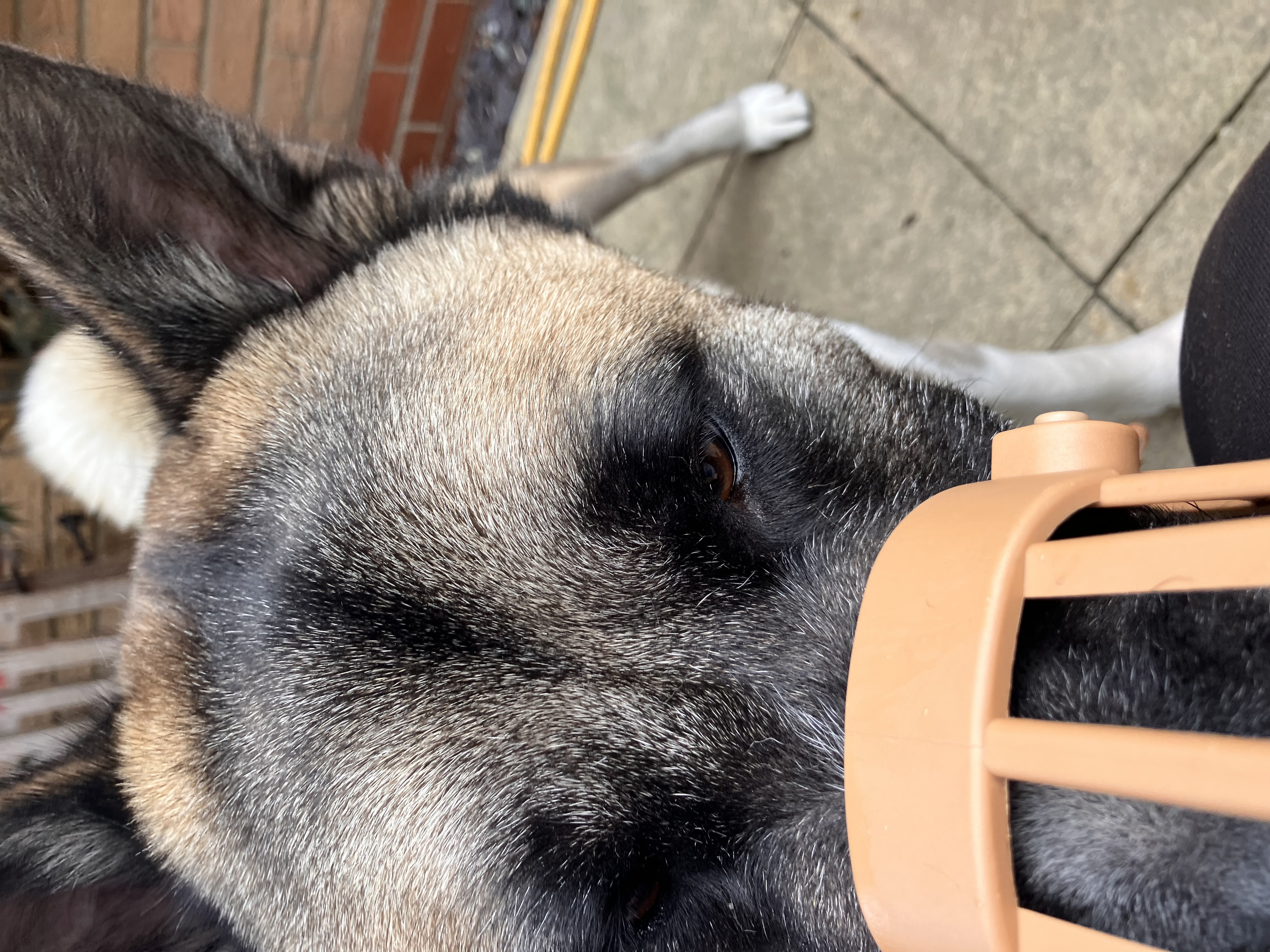
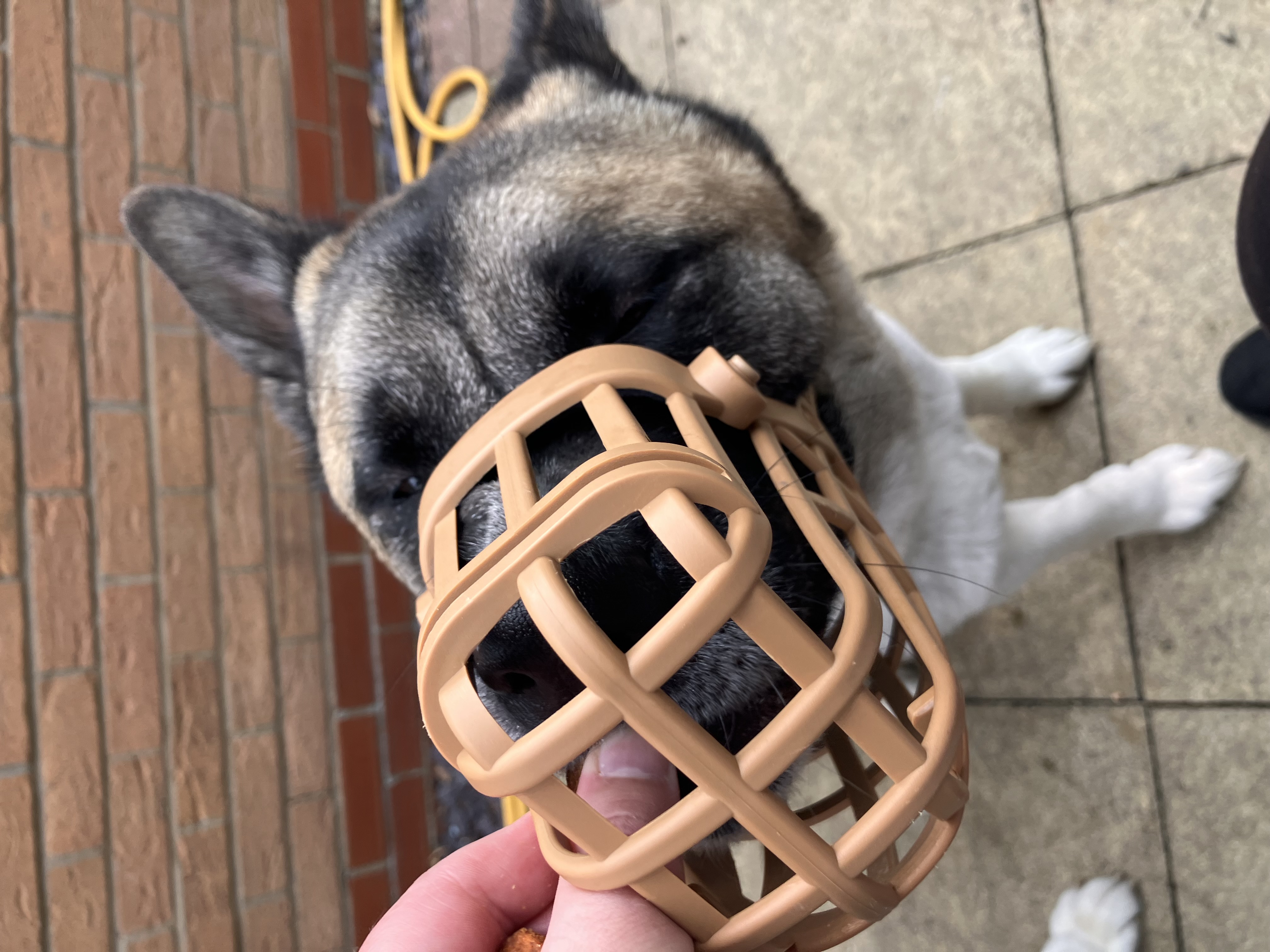
Following on from our last blog post… muzzle training isn’t something you should only think about when you suddenly need a muzzle. The best time to introduce one is when your dog is relaxed, healthy, and there’s no pressure.
The aim is simple: teach your dog that wearing a muzzle predicts good things. With patience and positive reinforcement, most dogs can learn to wear a muzzle happily and confidently.
Before You Begin
Choose the right muzzle.
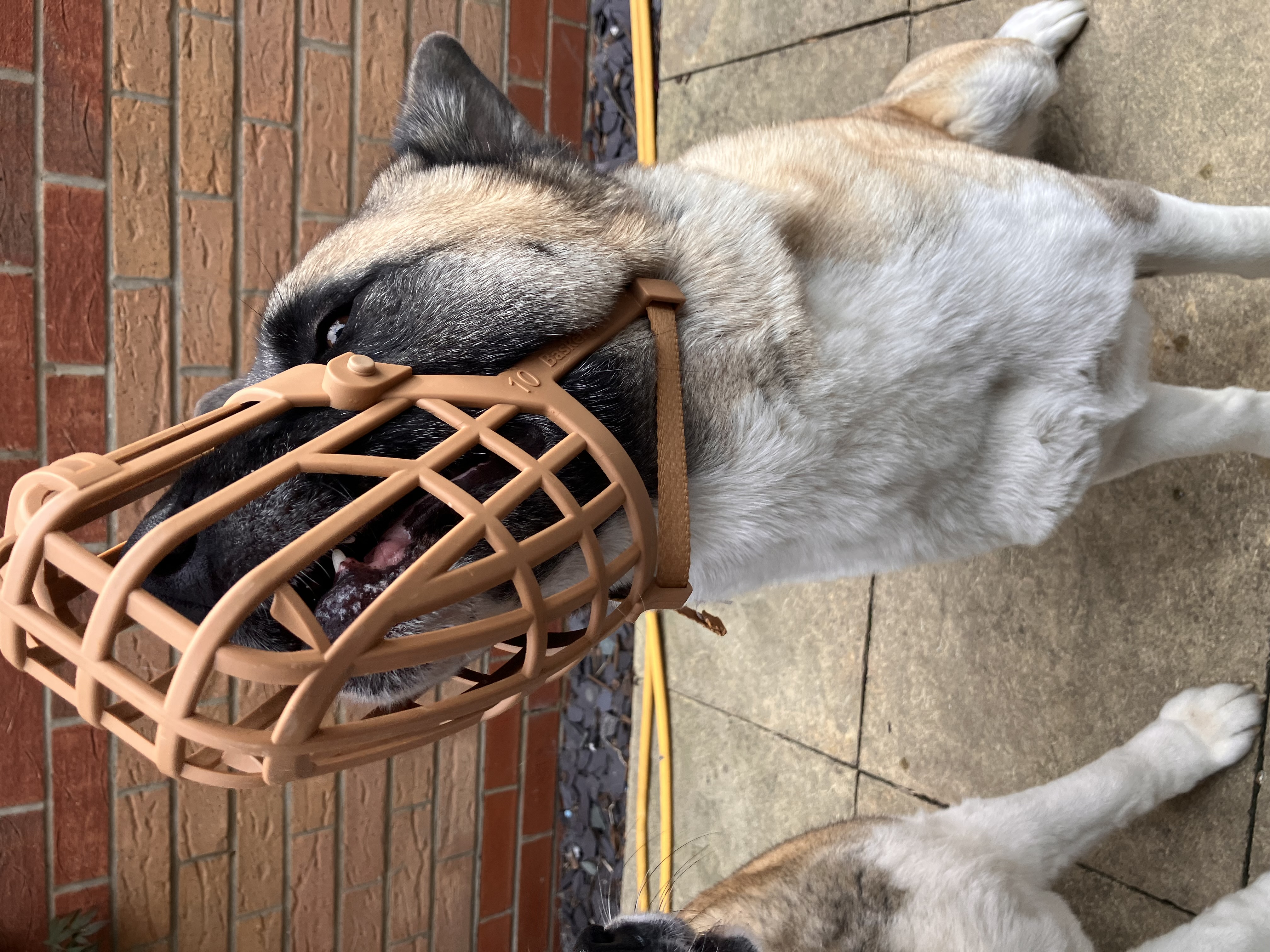
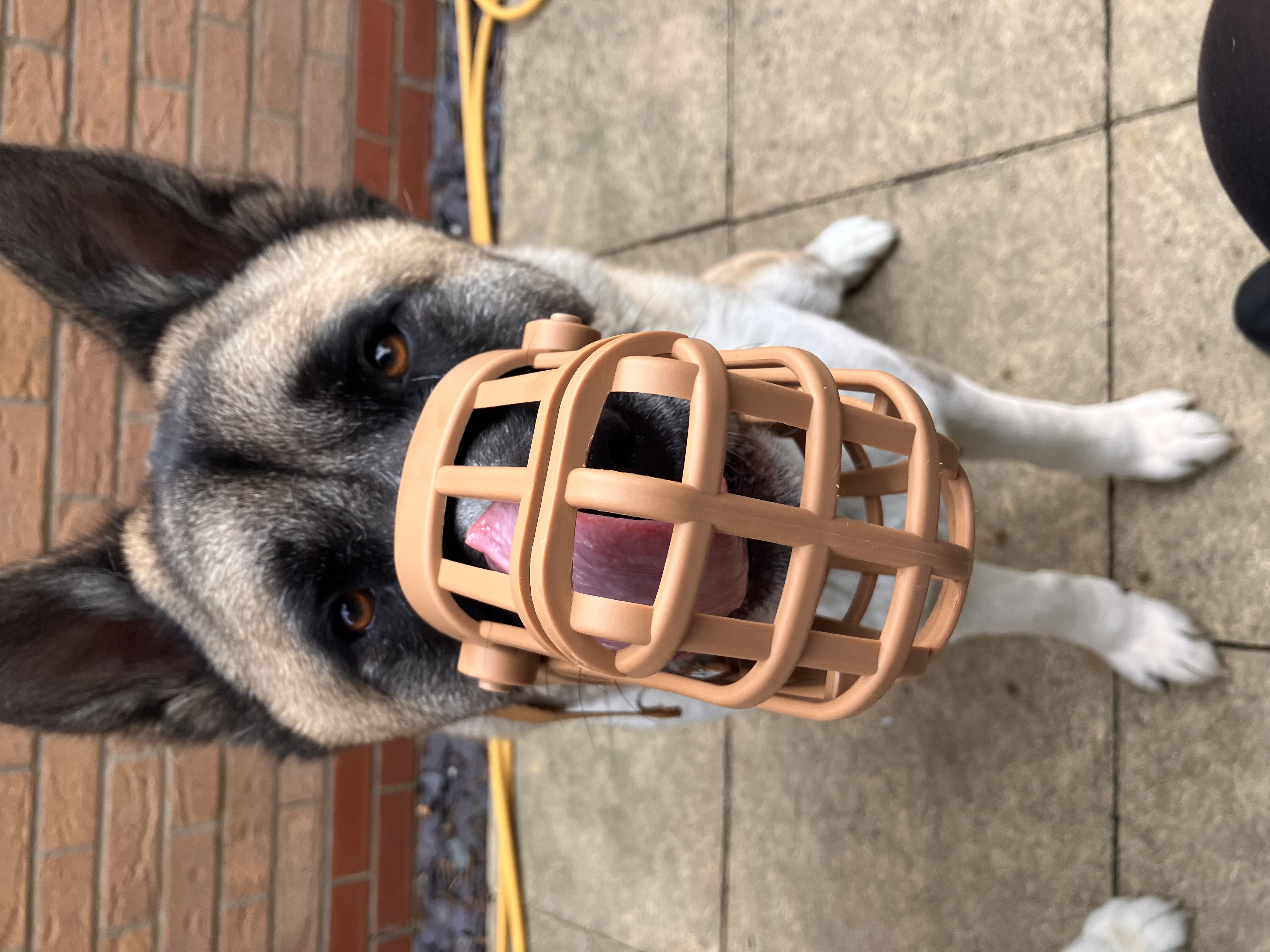
For training and everyday use, a well-fitted basket muzzle is the best option. It should allow your dog to:
Pant comfortably
Drink water
Take treats
Yawn fully
Breathe freely
A muzzle that is too tight, too small, or prevents panting is not suitable for walks or extended wear.
Remember, every dog learns at their own pace. Some dogs may be comfortable within a few days, while others may need several weeks. There’s no benefit in rushing.
Step 1: Let Your Dog Investigate
Place the muzzle on the floor and allow your dog to explore it at their own pace.
Each time they look at it, sniff it, or move towards it, reward them with a tasty treat and over the top praise.
Don’t try to put it on them.
The goal is simply for your dog to think:
“That strange thing makes chicken appear!”
Keep sessions short, around two to three minutes, and finish before your dog loses interest.
Step 2: Encourage Nose In
Hold the muzzle in your hand and place a high-value treat inside so your dog has to put their nose in to get it.
Let them choose to do this.
Never push the muzzle onto their face.
Repeat several times until your dog happily places their nose inside without hesitation.
Step 3: Build Duration
Once your dog is confidently placing their nose inside, begin rewarding them while their nose remains in the muzzle.
Feed several small treats through the openings before allowing them to remove their nose.
Gradually increase the amount of time they keep their nose inside.
Only move on when your dog looks relaxed.
Step 4: Introduce the Strap
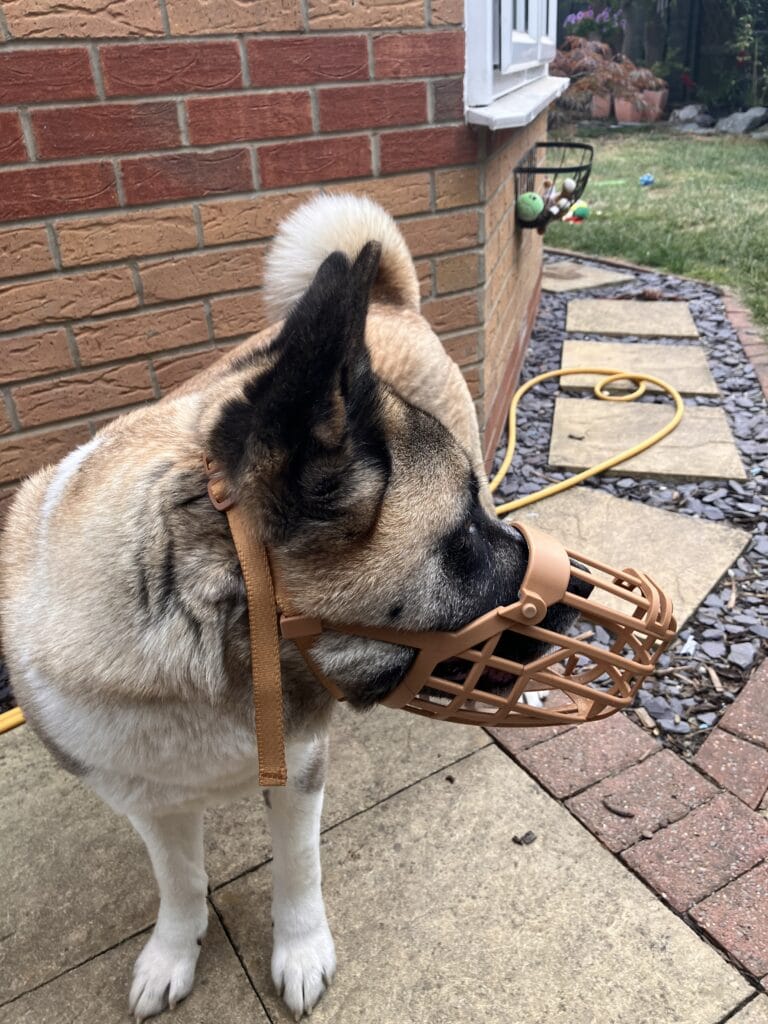
Once your dog is comfortable wearing the muzzle for a few seconds, gently touch the straps behind their head.
Reward immediately.
Progress to briefly fastening the strap, then unfastening it straight away.
Reward generously.
Over several sessions, slowly increase the amount of time the strap remains fastened.
Step 5: Add Movement
Once your dog is happily wearing the muzzle indoors, encourage them to move around while wearing it.
Play a game.
Scatter treats on the floor.
Ask for easy behaviours they already know.
Keep everything fun and rewarding.
Step 6: Wear It Around the House
Before heading outside, let your dog wear the muzzle for short periods indoors while doing normal activities.
Aim for calm, positive experiences.
If your dog starts pawing at the muzzle, avoid removing it immediately, as this can accidentally teach them that pawing makes it disappear.
Instead, redirect them with treats, toys, or simple activities, then remove the muzzle while they are calm.
Step 7: Take It Outside
Your first walk shouldn’t be the first time your dog wears their muzzle.
Once they’re confident indoors, start with very short walks in quiet areas.
Continue rewarding throughout the walk so wearing the muzzle remains a positive experience.
Gradually increase the duration over several outings.
Training Tips for Success
✔ Keep sessions short and fun.
✔ Always use high value rewards such as chicken, cheese, or sausage.
✔ Let your dog progress at their own pace.
✔ End each session on a positive note.
✔ Practise little and often.
Avoid These Common Mistakes
✘ Don’t force the muzzle onto your dog.
✘ Don’t only use it for unpleasant experiences like vet visits.
✘ Don’t rush the process.
✘ Don’t use the muzzle as a punishment.
✘ Don’t leave your dog unsupervised while wearing a muzzle.
Remember
A muzzle should become just another piece of equipment, like a harness or lead.
Many dogs eventually become excited when they see their muzzle because they know it means treats, training, adventures, or walks.
By taking the time to introduce it properly, you’re helping your dog feel confident and relaxed while ensuring they can wear it safely whenever life requires it. With patience, consistency, and plenty of rewards, muzzle training can become one of the most valuable life skills you teach your dog